MestoGo - Malaysia

MestoGo app is now available.
MestoGo - Malaysia
Stay connected while exploring Malaysia. Complete guide to SIM cards, eSIMs, mobile providers, and activation process.
Malaysia offers excellent mobile network coverage with 4G and 5G available in most urban and tourist areas. Getting a local SIM card is highly recommended for international travelers - it's affordable, reliable, and much cheaper than international roaming. Malaysian law requires all prepaid SIM card users to register their passport information, so always have your passport ready when purchasing.
Pre-book your SIM card online for instant pickup at the airport or immediate eSIM activation. Save time and ensure availability upon arrival.
Malaysia has several major mobile network operators, each offering competitive prepaid plans for tourists. All providers support 4G nationwide and 5G in major cities.
Premium Provider • Best Coverage
Widest Coverage • Rural Areas
Budget-Friendly • Popular with Tourists
Competitive Rates • Good Urban Coverage
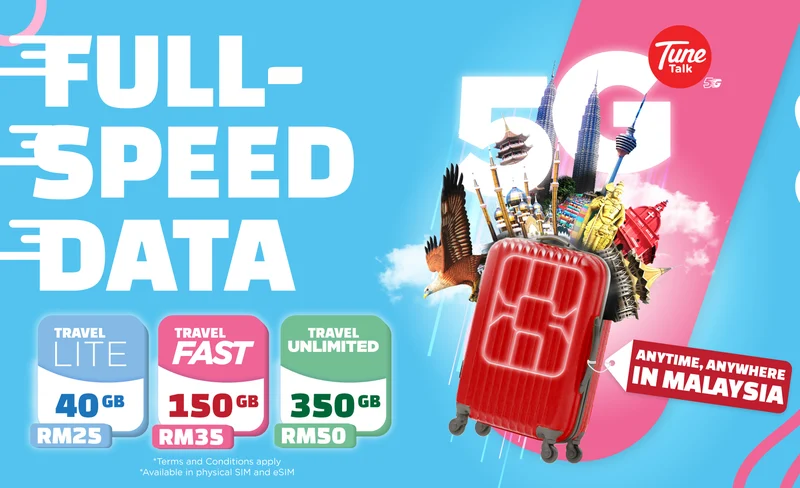
Travel-Focused • eSIM Specialist
Budget Provider • 4G-Only
Activating your SIM card is straightforward. Follow these steps to get connected quickly:
Insert the physical SIM card into your phone's SIM tray. For eSIM, scan the QR code provided via email or app.
Wait 1-5 minutes for your phone to detect the network. You'll see the provider name (e.g., MAXIS, CELCOM) appear in the status bar.
Call the activation number (usually 100 or 200) or use the provider's app to register. You'll need your passport - this is mandatory under Malaysian law.
Provide your full name, passport number, and nationality during registration. Keep your passport with you if visiting a provider store.
Top up your balance via the provider's app, at a convenience store, or online. Then start using data, calls, and SMS immediately.
Mandatory for all foreign nationals. Complete within 3 days before arrival. Free of charge and takes only 5 minutes.
Check your eVisa application status online. Enter your reference number and passport details to verify approval.
Get live weather forecasts, rain alerts, and current conditions for cities across Malaysia. Plan your activities accordingly.
Access important emergency numbers and government helplines for medical, police, and tourist assistance.
The best option depends on your preference. For convenience, pick up a SIM card at KLIA airport (T1 or T2) - kiosks and convenience stores are available 24/7. For better prices and guaranteed availability, pre-book online through Klook or provider websites. If you're already in Malaysia, visit any 7-Eleven, 99 Speedmart, or official provider outlet. Always bring your passport for registration, which is mandatory by Malaysian law.
Yes, if your phone is locked to your home carrier, you'll need to unlock it before using a Malaysian SIM card. Contact your carrier to request an unlock - most will do this if you've completed your contract or paid an early termination fee. Check your phone's status by inserting a SIM from another carrier before your trip. Unlocked phones will work with any SIM card worldwide.
Malaysia has four major providers: Maxis (premium, best coverage), Celcom (widest coverage, especially in rural areas), Digi (budget-friendly, popular with tourists), and U Mobile (competitive rates, good urban coverage). Tune Talk and Yes are also popular options - Tune Talk is travel-focused with good tourist plans, while Yes offers budget 4G-only plans. All major providers offer eSIM support now.
For a 1-week trip, 3-5GB is usually sufficient if you mainly use Wi-Fi at hotels. For 2-3 weeks, aim for 10-15GB if you use GPS navigation frequently, share photos/videos, or need to work remotely. Heavy users (streaming, video calls) should consider 20GB+. Most tourist plans cost RM10-15 for 5-10GB (7-15 days). Data is cheaper than in many countries, so it's better to have extra than run out mid-trip.
Yes, through roaming, but it's generally not recommended. Roaming can cost RM10-50 per MB (that's RM500-2500 for 100MB), and calls back home may cost RM3-5 per minute. Check with your carrier for international roaming packages, but they're often more expensive than local SIMs. Exception: if you receive a lot of important calls and can't change your number, consider a dual-SIM phone or call forwarding to a local number.
Yes, eSIM is widely available from all major providers (Maxis, Celcom, Digi, U Mobile) and MVNOs like Tune Talk. You can purchase eSIMs online through Klook, Airalo, or directly from provider websites. eSIMs are perfect if your phone supports them - no physical card needed, instant activation, and you can keep your home SIM active. Download the provider's app (MyMaxis, Celcom Life, MyDigi, U Mobile) to activate and manage your eSIM.
Topping up is easy and convenient. Method 1: Use the provider's mobile app (MyMaxis, Celcom Life, MyDigi) with credit/debit card or online banking. Method 2: Visit any 7-Eleven, 99 Speedmart, or convenience store - tell them your number and how much to top up (RM10-500). Method 3: Use online banking or e-wallets like GrabPay, Touch 'n Go, or Boost. Method 4: Purchase top-up vouchers from supermarkets or provider outlets. Most providers also offer auto-top-up or unlimited data add-ons.
Free Wi-Fi is available in most hotels, malls, cafes, restaurants, and tourist attractions. However, reliability varies significantly. Hotel Wi-Fi is usually good but may be slow in rooms. Public Wi-Fi in malls and airports is generally reliable. However, free Wi-Fi often has bandwidth limits, can be intermittent, and may not be available in rural areas or during travel between cities. For GPS navigation, ride-hailing apps (Grab), and staying connected during outdoor activities, a local SIM is much more reliable than relying solely on free Wi-Fi.